“If you want peace of mind, do not find fault with others. Rather, see your own faults. Learn to make the whole world your own. No one is a stranger, my child: this whole world is your own!"
~ Sri Sarada Devi
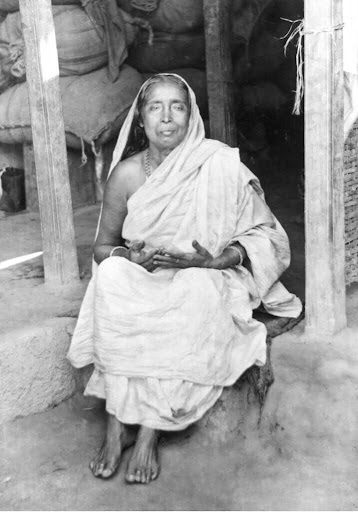
The Divinity of God expresses itself in many ways. One of them being the spiritual power that Sri Sarada Devi presented to this world. Also known as the “Holy Mother,” Sarada Devi was revered for her inherent simplicity and dedication to her many roles as a disciple, wife, and teacher.
Her passion for service and motherly affection towards her devotees were evident as she frequently said “I am the Mother, who will look after them if not I?” As a young girl, Sarada Devi was extremely fond of caring for the poor and assisting her parents. She spent most of her time in family duties such as helping her mother in the kitchen, picking cotton in the fields, feeding cattle, and carrying food to her father and other workers engaged in work on the farm. She had no formal schooling but managed to learn the Bengali alphabet, and over time, she could read the Ramayana and the Mahabharata.
It was the local tradition for girls to be married very early. So at age five she was married to Sri Ramakrishna. After the marriage, she continued to live with her parents in native village Jayrambati while Sri Ramakrishna lived a God-intoxicated life at Dakshineshwar.
Sarada had her first meaningful contact with her husband when she was 13. At this time, he guided her in spiritual and secular matters. He instructed her in spiritual disciplines such as non-attachment, prayer, meditation, self-control and household duties such as serving guests, respecting elders, travelling carefully etc.
"At that time,” she said later, "I always felt as if a jar full of bliss was placed in my heart. It is impossible to describe the fullness of that joy."
Sarada took on the role of his spiritual counterpart. Much of her religious knowledge came from Ramakrishna’s teachings yet her innate spiritual potential was no surprise to him or his disciples. She soon was regarded by all as the “Universal Mother.”
While Sarada was still living with her family, a report came to the village that Ramakrishna had become insane. She made up her mind to see the situation with her own eyes. At age eighteen, she walked to Dakshineshwar to meet him. Sri Ramakrishna, who had immersed himself in the intense practice of several spiritual disciplines for more than twelve years, had reached the highest state of realization in which he saw God in all beings. He received Sarada with great affection and allowed her to stay with him. Soon they developed a close relationship. Sarada served Sri Ramakrishna as his devoted wife and disciple while remaining a virgin nun and following the spiritual path.
Sri Ramakrishna looked upon Sarada as a remarkable manifestation of the Divine Mother of the universe. His devotion to her awakened the universal Motherhood latent in her. When disciples began to gather around Sri Ramakrishna, she looked upon them as her children. She stayed in a small room at Dakshineshwar that had hardly any amenities. Cooking took up a significant part of her time. She prepared separate meals for Sri Ramakrishna, who had a weak stomach. She also prepared meals for the increasing number of devotees who came to see Sri Ramakrishna. But she bore all the difficulties silently and lived in contentment and peace as the joy of serving her husband outweighed all her physical hardships.
Following Sri Ramakrishna’s passing, Sarada Devi went on a pilgrimage to Vrindavan and experienced an increase in spiritual consciousness. She later accepted the role of Guru and continued to maintain her motherly connection with people and inspired them by living up to her spiritual values. Those who were once Ramakrishna’s disciples then became the children of Sarada Devi. She embraced countless people with no regard for their past deeds, good or bad, and welcomed them with open arms. Despite being brought up in a conservative society, her progressive views carried her compassion even further and attracted people from all walks of life.
Sri Ramakrishna was fully aware of Holy Mother’s divine nature and future mission. Before his death, he gave her detailed instructions on how to awaken the spirituality of her future disciples. In 1886, after his Mahasamadhi, she spent some months on a pilgrimage to Kashi and Vrindaban and then went to Kamarpukur, where she lived in great austerity. Coming to know of her poor living conditions, the disciples of Sri Ramakrishna brought her to Kolkata, where she began a new phase of her life. She now began to accept spiritual seekers as her disciples and became the open doorway to immortality for hundreds of people. Her great universal mother-heart, endowed with boundless love and compassion, embraced all people without distinction, including many who had lived sinful lives.
Later on in her journey, she was known for being Swami Vivekananda’s keen supporter in his work to empower people in India. She also focused on caring for girls and women as she was involved in a school for girls started by Sister Nivedita who believed that Sarada Devi’s life “was one long stillness of prayer.”
When the Western women disciples of Swami Vivekananda came to Kolkata, she accepted them with open arms as her daughters, ignoring the restrictions of the orthodox society of those days. Although she had grown up in a conservative agrarian society, without any access to modern education, she held progressive views. Hence she whole-heartedly supported Swami Vivekananda in his plans for the rejuvenation of India and the uplift of the masses and women.
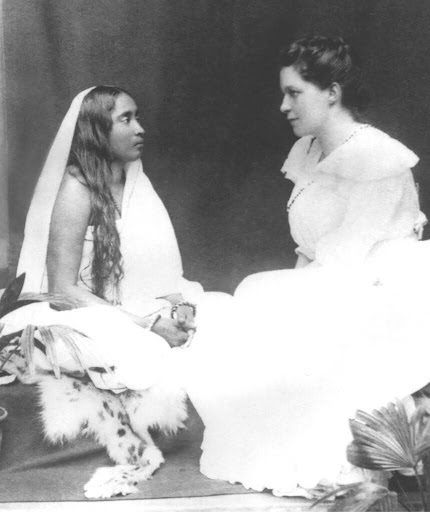
She spent her life partly in Kolkata and partly in her native village Jayrambati. During the early years of her stay in Kolkata, her needs were looked after by Swami Yogananda, a disciple of Sri Ramakrishna. In later years her needs were looked after by another disciple of Sri Ramakrishna, Swami Saradananda, who built a new house for her called Mayer Bari in Kolkata in 1910.
Although she was highly venerated for her spiritual status and worshipped as the Divine Mother, she continued to live like a simple village mother, washing clothes, sweeping the floor, bringing water from the pond, dressing vegetables, and cooking and serving food.
She looked upon herself as the Mother of all beings, including animals and birds and spent her entire life serving them as her children, undergoing unending sacrifice and self-denial. On her role in the mission of Sri Ramakrishna on earth, she stated: “My son, you know the Master had a maternal attitude (Matri-bhava) towards everyone. He has left me behind to manifest that Divine Motherhood in the world.”
Among many of Sarada Devi’s qualities, she was admired for her simple and peaceful nature. Regardless of the situation, she handled challenges calmly with an awareness of God and remained committed to build a more peaceful world that did not see faults in others. Rather, she strongly believed in looking within oneself first and bettering ourselves.
Sarada Devi was a symbol of wisdom, purity, and the start of a spiritual awakening in a modern society. Her dedication towards accepting people of all backgrounds spread to devotees around the world and she is remembered to this day for her role as the Mother of Humanity.
Important Teachings of Sri Sarada Devi:
Just as the clouds are blown away by the wind, so is the thirst for material pleasure removed by the utterance of the Lord's name.
Just as water, which tends to flow downwards, is drawn up to the sky by the sun's rays, the grace of God likewise elevates the mind, which tends to run after sense objects.
From desire, this body comes into being. When there is no desire at all, the body falls away. With the complete cessation of desire comes the eventual end.
Practice meditation, and by and by your mind will be so calm and fixed that you will find it difficult to keep it away from meditation.
One cannot escape the effect of one's past karma. But then, if a person leads a prayerful life, he gets off with only the prick of a thorn in the leg, which otherwise would have been a deep wound.
Through spiritual disciplines, the ties of past karma are cut asunder. But the realization of God cannot be achieved without ecstatic love for him.
If my son wallows in the dust or mud, it is I who have to wipe off all the dirt and take him into my lap.
Don't puzzle the mind with too many inquiries. One finds it difficult to put one single thing into practice but dares invite distraction by filling the mind with too many things.
Recommended for further reading
- Sri Ma Sarada Devi by Swami Gambhirananda
- The Gospel of Holy Mother
- Sri Sarada Devi: The Universal Mother By Janani Shivakumar